

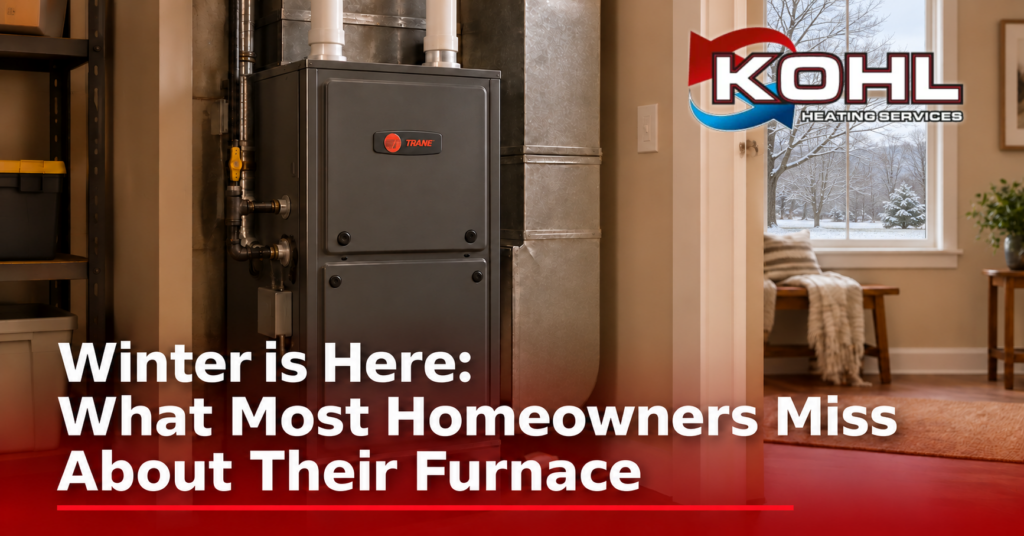
Winter Is Here: What Most Homeowners Miss About Their Furnace
During winter, homeowners should check their furnace filter, keep vents clear, test carbon monoxide alarms, and pay attention to changes in heating performance. If annual professional maintenance hasn’t been completed, it is still worth scheduling, even after the heating season has begun.
Winter is here in Cranberry Township, and dependable heat is now an everyday necessity. For homeowners in Wexford and the northern Pittsburgh area, cold mornings and long winter nights make furnace performance especially noticeable.
But a furnace that turns on and produces warm air may still have issues that deserve attention. Does your home heat evenly? Does the furnace repeatedly shut off before reaching the thermostat setting? Have new noises developed since you started using the heat more regularly?
Understanding those changes and knowing which tasks belong to a professional can help you make informed decisions about your home’s heating this winter.
Why Can Furnace Problems Become More Noticeable During Winter?
Cold weather increases heating demand, which can make existing airflow, ignition, or equipment problems more noticeable. A furnace that is kept up during mild weather may struggle when your home needs more consistent heat.
For example, a clogged filter can restrict airflow and contribute to overheating. The furnace’s safety controls may then shut the burners off. Repeatedly starting and stopping before reaching the desired temperature is often called short cycling.
Thermostat problems, faulty components, and incorrect equipment sizing can also cause short cycling. The symptom alone does not identify the cause, which is why repeated shutdowns deserve professional evaluation.
Longer heating cycles during colder weather are not automatically a sign of trouble. Pay attention to whether your furnace maintains the thermostat setting and whether its operation has changed.
What Should Homeowners Check While the Furnace Is Running Daily?
Start with the filter, thermostat, accessible vents, and carbon monoxide alarms. These checks remain important throughout winter. Follow your equipment’s instructions and leave internal furnace repairs to a qualified technician.
Check the air filter
Inspect the filter regularly and replace or clean it according to the furnace and filter manufacturer’s instructions. Use the correct size and recommended filter type. A dirty filter can restrict airflow, increase energy use, and contribute to equipment problems.
If you replaced the filter at the beginning of the heating season, don’t assume it will last all winter. Continue checking its condition as your furnace gets regular use.
Keep supply and return vents clear
Move furniture, rugs, and other objects that block airflow. Supply vents deliver heated air, while return vents allow air to circulate back through the system.
As you rearrange furniture or add seasonal decorations, make sure vents remain unobstructed.
Review thermostat settings
Confirm that the thermostat is set to heat and that its schedule matches your household’s needs. Replace batteries if your thermostat uses them and indicates they are low.
If the house repeatedly fails to reach the set temperature, note when it happens and share that information with your technician.
Test carbon monoxide alarms
Follow the alarm manufacturer’s testing and replacement instructions. Carbon monoxide alarms should be installed on every level of the home and outside sleeping areas.
Watch for snow around exterior furnace vents
After snowfall or drifting snow, check accessible outdoor furnace vent openings from a safe location. Keep snow from blocking them. Blocked exhaust vents can allow dangerous carbon monoxide to build up inside the home. If an opening is iced over or difficult to access, contact a professional.
These checks complement professional maintenance. They do not replace an inspection of the furnace’s combustion, venting, and safety components.
Is It Too Late to Schedule Furnace Maintenance During Winter?
No. If your furnace has not received its annual maintenance, scheduling service during winter is still worthwhile. An inspection can help identify concerns while you are relying on the system regularly.
The U.S. Consumer Product Safety Commission recommends annual professional inspection and servicing of home heating systems, including chimneys and vents.
If your furnace is already shutting down repeatedly, struggling to heat the house, or making unusual noises, describe those symptoms when scheduling. An existing problem may require a diagnostic service visit rather than routine maintenance alone.
Why Is Annual Furnace Maintenance Important for Safety?
A professional inspection can identify problems with combustion, venting, and furnace components that homeowners may not notice during normal operation.
A gas furnace produces heat by burning fuel. Its heat exchanger and venting system help keep combustion gases separated from the air circulated through your home and direct exhaust outdoors.
During winter, warm air coming from the vents can feel reassuring. However, heating the house does not, by itself, establish that the furnace is operating safely.
Working carbon monoxide alarms remain essential even when equipment receives regular maintenance.
What Does a Professional Furnace Inspection Evaluate?
A furnace inspection should evaluate safe operation, heating performance, and the condition of key components. The exact procedures depend on the equipment and the maintenance service provided.
Important areas include:
- Heat exchanger and burners: Checking their condition and evaluating combustion.
- Fuel connections and gas pressure: Identifying problems that can affect operation.
- Electrical connections and controls: Checking connections and system controls.
- Blower and airflow: Evaluating air movement through the system.
- Venting: Checking the exhaust system for conditions that could interfere with safe operation.
- Thermostat and heating cycle: Confirming that the furnace starts, operates, and shuts down properly.
Ask for an explanation of any findings, including which issues affect safety, which require repair, and which can be monitored. An inspection helps you understand the system’s condition; it cannot guarantee that no component will fail later.
What Signs Mean Your Furnace Needs Professional Attention This Winter?
Repeated shutdowns, difficulty maintaining the thermostat setting, and persistent changes in operation warrant an evaluation.
Pay attention if your furnace:
- Starts and stops repeatedly before the house reaches the set temperature.
- Runs but provides little heat.
- Develops persistent or unusual noises.
- Leaves some rooms noticeably colder than others.
- Uses more energy without an obvious explanation.
These symptoms do not automatically mean you need a new furnace. Uneven heating can involve ductwork, airflow, or insulation. Higher winter bills can also reflect colder weather, increased utility rates, or changes in thermostat settings.
A diagnosis should come before a repair or replacement decision. If your furnace stops producing heat during cold weather, contact a heating professional promptly.
When Should You Consider Furnace Repair or Replacement?
Consider the furnace’s condition, repair history, safety, and performance together. Age is one factor, not an automatic reason to replace it.
ENERGY STAR identifies a furnace older than 15 years as a reason to consider replacement, particularly alongside frequent repairs or increasing energy costs.
An isolated repair may still make sense for an otherwise dependable system. An older furnace with repeated failures or a major component problem deserves a broader discussion about repair costs and replacement options.
Before deciding, ask:
- What is causing the problem?
- Will the proposed repair address that cause?
- Are other significant components showing wear?
- Could ductwork or insulation be contributing to the comfort issue?
- What are the expected benefits and limitations of replacement?
For Cranberry Township homeowners, winter puts heating performance into focus. Whether your furnace needs routine maintenance, a specific repair, or a replacement discussion, the goal is to understand what your home needs to stay comfortable through the remaining cold months.
What Does a High-Efficiency Furnace Offer? A Look at Trane’s 97 Two-Stage Variable Speed Gas Furnace
For homeowners considering replacement, understanding furnace features can make comparing options easier. One of the premium models Kohl Heating Services carries is the Trane 97 Two-Stage Variable Speed Gas Furnace, which combines efficient fuel use with two-stage heating and variable-speed airflow.
Here’s what those features mean for your home.
What Does a 97% AFUE Rating Mean?
A 97% Annual Fuel Utilization Efficiency rating means approximately 97% of the fuel energy the furnace consumes becomes usable heat over a typical heating season. Compared with a lower-efficiency furnace, it can produce the same amount of heat using less fuel.
That does not mean your heating bill will drop by 97%. Actual savings depend on your current equipment, fuel prices, thermostat settings, insulation, and installation quality.
How Does Two-Stage Heating Improve Comfort?
Two-stage heating gives the furnace two levels of heat output: a lower setting for lighter demand and a higher setting when your home needs more warmth.
For homes in Cranberry Township and the northern Pittsburgh area, that flexibility can be useful as mild days give way to colder winter weather. Instead of operating at full output every time it turns on, the furnace can use its lower stage when less heat is needed, helping maintain more consistent indoor temperatures.
What Does a Variable-Speed Blower Do?
A variable-speed blower adjusts airflow to support more consistent circulation and quieter operation. Two-stage heating controls how much heat the furnace produces; the blower helps distribute that heat throughout your home.
This model also includes an insulated cabinet and stainless steel primary and secondary heat exchangers. Proper sizing and installation remain important, as advanced equipment alone cannot correct every ductwork or insulation problem.
Can the Furnace Help With Summer Humidity?
Yes, the furnace’s blower can support humidity removal when it operates with a compatible cooling system. Trane’s Comfort-R™ technology manages airflow to help the cooling system remove moisture during summer operation.
The furnace itself does not provide air conditioning or act as a standalone dehumidifier. This benefit comes from how its blower works with the rest of the system.
How Much Does This Trane Furnace Cost Through Kohl?
Kohl Heating Services offers the Trane 97 Two-Stage Variable Speed Gas Furnace starting at $7,000, plus no interest if paid in full within 18 months with regular monthly payments.
A home evaluation helps determine the appropriate furnace size, installation requirements, and final price. Kohl can explain the available options and complete financing terms so you can make an informed decision.
Frequently Asked Questions About Furnace Maintenance
When should I schedule furnace maintenance in Western Pennsylvania?
Schedule annual maintenance before regular heating use when possible. Fall provides an opportunity to address concerns before colder weather increases demand. Even if the heating season has already started, maintenance can still be useful.
Does my furnace need maintenance if it seems to work normally?
Yes. Normal heating does not reveal the condition of every component. Annual professional maintenance allows a technician to evaluate operation and look for problems that may not be obvious to you.
Why is one room colder than the rest of the house?
A cold room may have restricted airflow, duct leakage, inadequate insulation, or greater heat loss through windows and exterior surfaces. Replacing the furnace without evaluating those factors may leave the problem unresolved.
Is it normal for a furnace to run longer when it gets colder?
Yes. Colder outdoor temperatures increase your home’s heating needs. Some furnaces also operate for longer periods at lower output by design. Repeated brief shutdowns or failure to maintain the set temperature deserve attention.
Preparing Your Home for Colder Weather
For homeowners across Cranberry Township and neighboring communities, furnace preparation starts with understanding the equipment already in your home.
Keep up with filter care, pay attention to changes in heating performance, maintain carbon monoxide alarms, and use professional inspections to guide decisions about repairs or replacement.
At Kohl Heating Services, we believe informed homeowners are better equipped to care for their heating systems. Knowing what to check and when to ask for help makes winter preparation more manageable.